Posted on Leave a comment

Teleoperated humanoid robots spar at CES side event in Las Vegas

Teleoperated humanoid robots spar at CES side event in Las Vegas

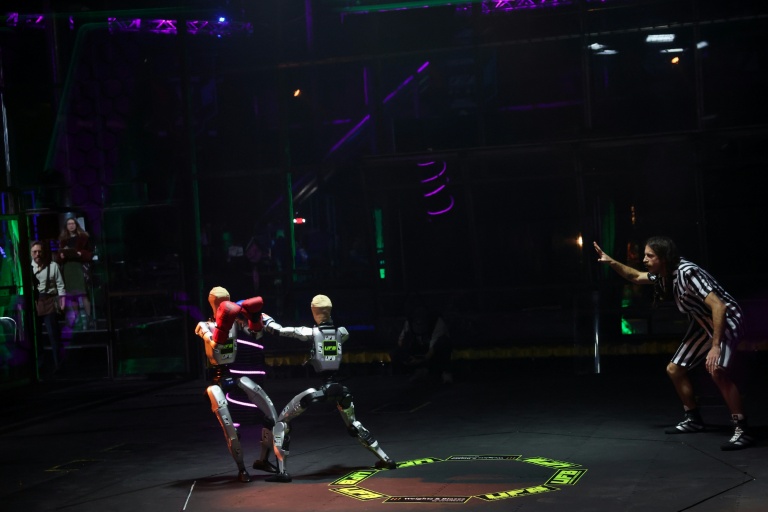
Humanoid robots took center stage at a side event during the Consumer Electronics Show in Las Vegas, where two child sized humanoids faced off in a controlled boxing style competition. The demonstration, branded as the Ultimate Fighting Bots competition, was staged at the BattleBots Arena and organized as a technical showcase rather than a commercial sport.

According to reporting by AFP, the humanoids mirrored the movements of human pilots using real time teleoperation. Sensors and motion capture systems translated upper body and foot movements into punches, blocks, and steps inside the ring. The robots operated untethered and relied on onboard balance control to remain upright after contact.

Technical focus over spectacle

While the format resembled a fight night, the event primarily highlighted core humanoid capabilities such as dynamic balance, impact tolerance, and low latency control. Engineers involved emphasized that the goal was to stress test hardware under unpredictable contact rather than to entertain a mass audience.

  • Whole body coordination during rapid upper limb motion
  • Stability recovery after external forces
  • Teleoperation latency and control fidelity

Each robot was roughly the size of a schoolchild, placing it in a category relevant to domestic and service oriented humanoid research. The compact scale reduced risk while still allowing meaningful evaluation of joint strength and control software.

Implications for humanoid development

Public demonstrations like this one reflect a broader trend in humanoid robotics toward live, unscripted testing environments. Physical interaction scenarios expose weaknesses in actuation, control loops, and mechanical design that are difficult to uncover in laboratory settings.

Although no commercial deployment was announced, the event underscored how teleoperation continues to serve as a bridge toward greater autonomy. Lessons from impact handling and balance recovery are directly applicable to industrial, logistics, and service use cases where humanoid robots must operate safely around people.

More details on the event are available from Digital Journal.
Posted on Leave a comment

Unitree G1 humanoid featured in CNBC demo on AI bubble debate

Unitree G1 humanoid featured in CNBC demo on AI bubble debate

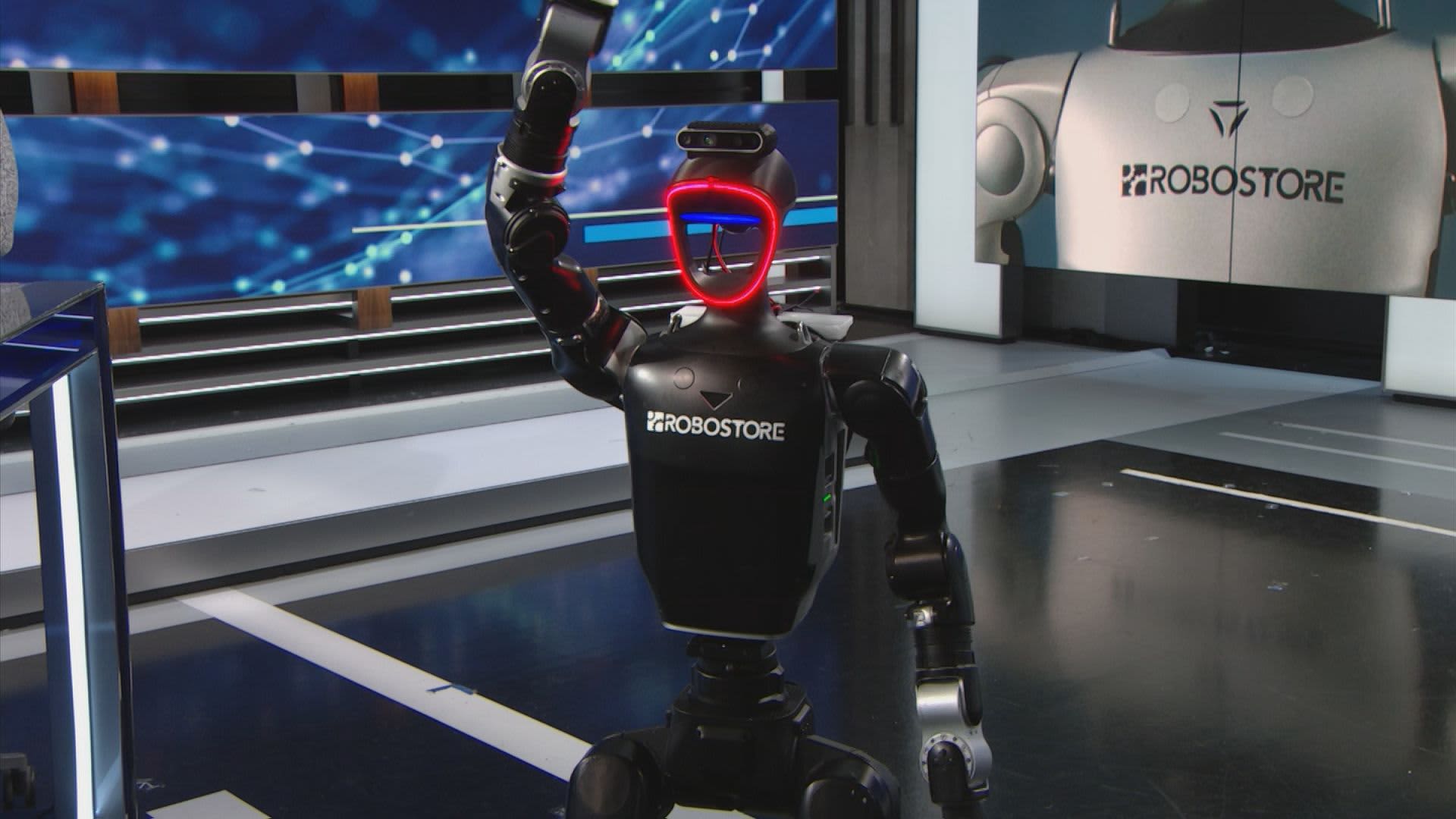
A recent CNBC segment put a humanoid robot in front of a familiar industry question: whether the current surge in artificial intelligence investment represents a bubble. The robot, identified as KOID and based on Unitree Robotics’ G1 humanoid platform, delivered a cautious, noncommittal response, emphasizing uncertainty rather than prediction.

Humanoid as a media-facing AI interface

The segment was framed as a novelty, but it reflects a growing pattern in which humanoid robots are used as physical embodiments of conversational AI. Rather than presenting new economic insight, the demonstration showcased the G1’s ability to engage in natural language dialogue, maintain balance, and operate reliably in a live broadcast environment.

For humanoid developers and operators, this type of exposure underscores how early deployments often focus on communication, demonstrations, and public interaction, well ahead of large scale industrial or service automation.

About the Unitree G1 platform

Unitree’s G1 is a compact humanoid designed to emphasize mobility, balance, and cost efficiency compared with larger research-oriented platforms. Publicly available information and prior demonstrations highlight several characteristics:

  • Bipedal locomotion with dynamic balance control
  • Upper body articulation suitable for gesturing and light manipulation
  • Integration with vision and speech systems for interactive tasks

While the CNBC appearance did not introduce new technical specifications, it reinforced the G1’s positioning as a general purpose humanoid platform suitable for demonstrations, research, and early commercial experimentation.

Implications for the humanoid robotics sector

Using a humanoid robot to comment on the AI investment cycle is largely symbolic, but it points to a broader trend. Humanoids are increasingly presented as accessible, human-scale interfaces to complex AI systems, especially in media, education, and public-facing environments.

For decision-makers in robotics and automation, the takeaway is less about the robot’s opinion and more about the role such platforms are beginning to play. Visibility, reliability in unscripted settings, and conversational competence are becoming baseline expectations as humanoid robots move from labs into wider public and commercial contexts.

Posted on Leave a comment

China Accelerates Humanoid Robot Production as Tesla Optimus Lags

China Accelerates Humanoid Robot Production as Tesla Optimus Lags

Humanoid robotics race shifts toward manufacturing scale

China is rapidly increasing the pace of humanoid robot development, moving from laboratory prototypes toward early production and deployment. The shift highlights a growing gap between Chinese robotics firms and Tesla, whose Optimus humanoid remains in a development and demonstration phase without a commercial rollout.

According to reporting by International Business Times, Chinese companies are emphasizing manufacturing readiness and near term use cases, positioning humanoid robots as practical tools for industry and services rather than long term research projects.

Chinese firms prioritize pilots and production readiness

Several Chinese humanoid robot developers are focusing on repeatable hardware platforms, localized supply chains, and government backed pilot programs. These efforts are aimed at deploying humanoids in controlled environments such as factories, logistics hubs, and public service facilities.

Key characteristics of the current Chinese approach include:

  • Incremental hardware designs optimized for manufacturability
  • Early field trials to validate stability, manipulation, and endurance
  • Integration with domestic AI software stacks and sensors

This strategy favors steady capability gains and faster feedback from real world operation, even if performance remains below long term human level goals.

Tesla Optimus remains pre commercial

Tesla has demonstrated Optimus performing basic manipulation and locomotion tasks, but the platform has not yet entered customer trials or announced a clear commercialization timeline. Public updates have focused on future potential, including internal factory use, rather than defined deployment programs.

For robotics practitioners, the contrast underscores different execution models. Tesla is pursuing tight integration between AI training, perception, and hardware, while Chinese competitors emphasize speed to pilot and scale.

Implications for the humanoid robotics market

The divergence in progress has implications for integrators and operators evaluating humanoid robots for labor augmentation. Near term opportunities may emerge first from vendors able to deliver limited but reliable capabilities at scale, even if autonomy and dexterity remain constrained.

As production volumes increase, cost, serviceability, and safety certification are likely to become key differentiators, shaping which humanoid platforms move beyond demonstrations into sustained deployment.